Friday, 30 January 2026

Thoughts on how to set up a residency #writerinschool


Thoughts on how to set up a residency #writerinschool

My weekly visits to St Gregory’s Catholic College, Bath, have come to an end now that the school year has finished.  I’m grateful to Headteacher, Ann Cusack, for inviting me to be Writer in Residence for a year, and to all students and staff who welcomed me to the school community and ensured that I enjoyed a busy, sometimes challenging, always stimulating and extremely happy year.

I’ve used this blog as means of keeping notes about my residency and I’ve tagged all relevant posts #writerinschool which you can use as a search term on this site, if you’d like to read all of my notes.   I’ve also copied these posts to my Medium site.

A few people have asked me about how I was funded and whether it’s usual for a school to employ a Writer in Residence.  For the latter question, in my experience, it isn’t common, and certainly not in a state school.  Increasingly, in the UK state school system, creative subjects, Art, Music, Drama, Design, are shrinking from the curriculum, and with cash-strapped budgets, even occasional author visits are becoming more scarce in some schools.  All the more reason to applaud St Gregory’s for their imagination and resourcefulness in setting up my residency.

In his article Creativity can be taught to anyone. So why are we leaving it to private schools? Creative Director of the National Theatre, Rufus Norris, writes that since 2010 there has been a 28% reduction in young people studying creative subjects at GCSE in state schools.  This, in large part, can be explained by the introduction of the English baccalaureate, or Ebacc, a school performance measure (introduced by Michael Gove when he was Education Minister) focusing on a core set of academic subjects studied for GCSE which does not include a single creative discipline.

Writers who visit many schools have noticed that increasingly, invitations come from the private sector and not from publicly funded schools.  Poet and children’s writer Michael Rosen recently tweeted:

Although I don’t have permission to divulge the financial arrangements of St Gregory’s, or to explain exactly how my residency was funded, I will say that I worked with young people of all ages and abilities (although mostly in the Year 7 to Year 9 age-groups  – 11 – 14 year olds): Pupil Premium students; EAL students; Gifted and Talented students; top set, middle set and bottom set students; students not belonging to any group that attracts additional funding and students belonging to several.

I will also say that the fee I was paid by the school amounted to considerably less than the daily rate I usually charge (which is negotiable but about £350 per day).  However, I was happy with my fee and it suited me well to have a fixed post for one academic year (especially as I was completing my poetry manuscript for my Nine Arches Press book at the same time) which meant that I saved time and money by not needing to apply for other types of funding or jobs.

My role as Writer in Residence

In school, I ran a Creative Writing Club at Break and Lunchtime once a week, which any student could attend, and I worked with a rota of students who came out of a scheduled English lesson to write with me several times a term.  Because of timetabling, some students worked with me more than others and some students never had the opportunity to work with me.  No student was forced to work with me if they didn’t want to and if a student particularly wanted to work with me, teachers tried to accommodate this.

As my previous posts document, we read, talked about and wrote poetry, short fiction and short plays in my sessions, but mostly poetry.  The brevity of poetry makes it a suitable form to fit into one hour ‘lessons’.  As I’ve written about previously, some of my students have been successful in different poetry competitions this year, and have performed their work at literature festivals, and a poetry anthology of students’ work is being produced for publication (by the school) next term.

Other activities I was involved in as Writer in Residence were reading and giving feedback on Personal Statements (for UCAS forms); talking over students’ personal writing projects (thrilled to find poets, novelists, playwrights, short story writers, song writers and graphic novelists at St Greg’s); reading and giving feedback on Creative Writing assignments for English GCSE and ‘A’ level studies; judging in-house writing competitions; circulating information about and submitting work to competitions.

Suggestions about how to fund a writing residency in a school

I’ll end by jotting down some thoughts about how a residency like this could be made possible, should you be a parent, teacher, writer, school governor, or someone interested in setting up a school residency.

Network

My residency came about because I made myself known to Ann Cusack, the Headteacher.  Ann was previously a teacher at the school my children attended so I let her know that I was a writer with experience of running writing workshops in schools and community settings.  Ann kept my details and stayed in touch.  It was a year before she contacted me to say she was interested in seeing if we could come to some kind of working arrangement.

Ann had met me in person and not just via email and this made a big difference.  I have, in the past, sent out emails to schools, suggesting that I run workshops or writing events for them, but I haven’t had much luck.  On occasion, I’ve approached a school in this way, set up a meeting, handed over pages of ideas for workshops and never heard from the school again.  Needless to say, I don’t do this any more!

I’m a member of NAWE and my details are listed with Literature Works, my nearest literature development agency, but it was the personal contact with a decision maker in a school that got me my residency.  So, if you’re a writer and want to work in a school, find ways of networking with teachers.  Years ago I offered free workshops to local schools to build up my experience so this is one way to start.  Talk to teachers about what you do – it’s surprising how few people knew that I was a writer until I mentioned it to them.  I’m not J K Rowling, after all!  It’s important to let people know what you do and to put the idea of a residency into people’s minds.  Even if you’re not a parent yourself, or someone with school age relatives, once you talk to people, you’ll be amazed to discover how many teachers, parents, school governors you might know.

think local but be discerning

Similarly, if you’re a teacher or someone in a school who wants to find a writer for a residency, think local.  it makes sense, in terms of costs and practicality, to find a writer who doesn’t live too far away, and don’t just consider ‘famous names’.  NAWE and local literature development agencies hold listings of writers and are a place to start looking but also ask parents and students for their contacts and recommendations.  I think it’s important to find a writer who understands how schools work and has some experience of them.  As well as running workshops in schools, I spent three years working as a Teaching Assistant (and have other teaching experience).  My DBS checks are up to date and, as a member of NAWE, I have Public Liability Insurance.  I’m also currently writing (a pamphlet published in 2014 and a full collection published in 2018) and published by reputable presses.  It’s worth considering all of these things when looking for a resident writer.

Some feedback

I’ll just share a few snippets of feedback from students which show that I wasn’t the only one who enjoyed the residency:

Q. How have the writing sessions helped you?

Before now, I never would have been able to express my feelings as well as this. It is my passion and my escape. (Year 9 student).

I now see poetry in a different light. (Year 9 student).

It’s helping me let out my emotions more through writing. (Year 9 student).

They have helped me become more creative and confident. (Year 9 student).

They have helped me with my imagination side because I don’t really get to use my imagination that much and I liked being able to use it and write scripts and things. (Year 8 student).

The sessions have helped me be happy with ideas I think are not good and I have learned how to write plays. (Year 9 student).

Poetry workshop ideas: #writerinschool


Poetry workshop ideas: #writerinschool

As you know, I was Writer in Residence at St Gregory’s School, Bath, in the academic year 2017-2018, and I’ve been using this blog as a place to record my experience, especially workshops I’ve run.

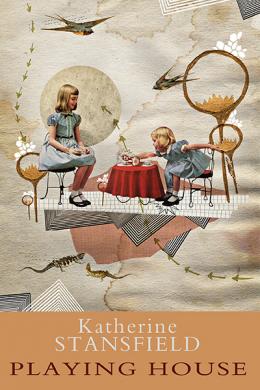
This is a post about using two poems by Katherine Stansfield, ‘How to make a good crisp sandwich’ and ‘Socks or cheese?’ from her poetry collection Playing House (Seren, 2014).

I used these poems in workshops with students aged 11 – 14 but I think poetry readers and writers of all ages would respond well to them.

I first shared the title of ‘Socks or cheese’ and asked students to name as many different types of cheese as they could.  Cheddar, inevitably, turned up.  Goat’s cheese, sheep’s cheese, cow’s cheese.

“How is cheese made?” someone asked and someone else answered.

Camembert, Brie and Gorgonzola were mentioned.  Then we turned to the poem and imagined a life without socks or cheese.

The poem begins with the lines

You can only have one

for the rest of your life

so the game goes.

Most students felt that they wouldn’t miss socks (We could wear tights! I don’t wear socks anyway! You can buy shoes with socks built in!).  Then we read the poem, and, like its speaker, began to consider the “seriousness”:

…./ If picking socks


you’ll always be taunted

by feta, begrudge the Cheddar

sandwiches of others….

More than one student said “I hate cheese!” – so an easy choice for them.

Then it was their turn to write a ‘socks or cheese’ poem.  If they wanted to, they could weigh up the benefits of socks or cheese or they could think of other choices to make.  Here are some of their suggestions: phone or computer; Xbox or Playstation; food or water;  long hair or short hair; day or night; phone or chocolate; cats or dogs; eyes or mouth; feet or hands; listening or speaking; trousers or toast – to name just a few!

The second poem we read was  ‘How to make a good crisp sandwich’.  Some students were already skilled in this art, others had never experienced such a culinary delight.  Surprisingly, perhaps, most students voted for plain crisps as the flavour of choice, like the speaker of the poem:

… / Flavour’s

up to you. These are plain – I’m a purist –

but ridged.  Think texture. Think noise.

Students liked the way the poet took the matter seriously and gave a lot of thought to a task that others might think trivial.  When it was their turn to write their own ‘How to make…’ poems, some suggestions were ‘the perfect avocado on toast’; ‘the best baked potato filling’; ‘the quickest breakfast'(“become an expert at dressing one-handed”); ‘the best value pudding’ (“lean over your neighbour’s fence and pluck an apple from their tree.”).

As always, thank you to St Gregory’s students for working hard and writing great poems and thank you Katherine Stansfield for the inspiration!

It might interest readers to know that for one week, 23 – 29 July, all Seren titles, including Playing House,  are half price in the summer sale!  Details on their website.

Poems that find a way to say what isn’t said #writerinschool


Poems that find a way to say what isn’t said #writerinschool

I wanted to write a few posts before my residency at St Gregory’s Catholic College ends, especially mentioning poems that prompted a lot of animated discussion and produced some exciting creative writing from school students.

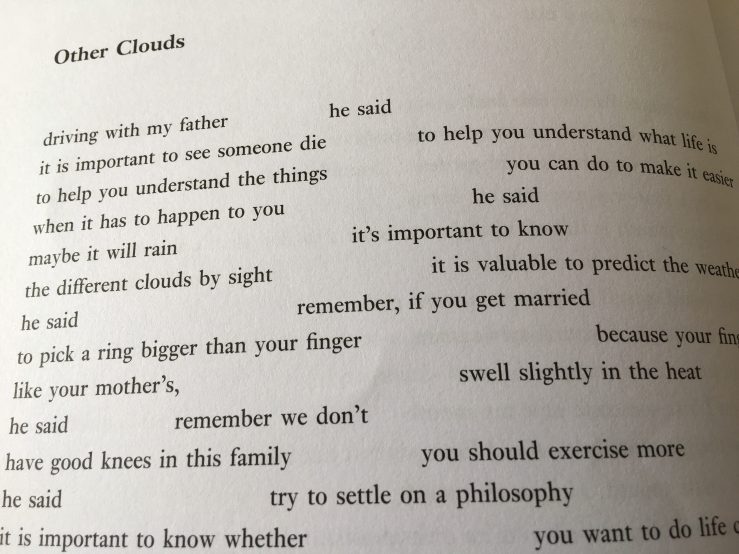
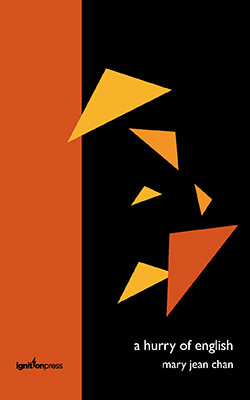
‘Other Clouds’ by Rebecca Perry from her collection Beauty/Beauty (Bloodaxe, 2015) and ‘what my mother (a poet) might say’ by Mary Jean Chan from pamphlet collection  a hurry of english (ignitionpress, Oxford Brookes Poetry Centre, 2018) have been two such poems.  Mary Jean Chan’s poem is available to read in full at The Poetry Society website (linked above) but I couldn’t find Rebecca Perry’s poem online so I’m including a short extract here.

I used these poems with Year 9 students (aged 13 and above).

When we first read the poems, students talked about how and why the poets had used or not used punctuation, spacing, keyboard functions (crossing through text in Chan’s poem).  They suggested that Rebecca Perry had used this spacing to perhaps replicate the to and fro conversation that was taking place between a father and an adult child in a car (they worked out the ‘child’ was driving so must be at least 17 or 18 years old).  They thought that perhaps someone had died,  perhaps one of the father’s parents, and they were driving to or from the funeral.

Then they discussed times that they had had conversations with a parent or grandparent, and had a go at writing their own poems using the same lay out as the Perry poem if they wished.  They could also borrow some of the poet’s phrases if they got stuck.  This gave students the space to write about reflective, intimate conversations they’d had with an adult they trusted and were close to.  One student wrote about chatting with their grandmother while shopping, another wrote about gardening with their Mum, another about walking with their Dad. Students shared snippets of advice adults had given them (as Perry does “remember, if you get married, to pick a ring bigger than your finger, because your fingers, like your mother’s, swell slightly in the heat”.)  Often these poems were tender and moving, and even if the conversations were stilted and awkward,  humour and love shone through.

Mary Jean Chan’s poem ‘what my mother (a poet) might say’ offered students a means to write about sometimes difficult topics.  One student wrote about what their grandfather thought about serving in the army during WWII in and what he actually said.  Another student wrote in the voice of someone being bullied, and used the crossing out text technique to describe what a victim wanted to say compared to what they were actually able to say.  Again, students produced powerful and often moving pieces of writing.

I haven’t given a detailed lesson plan in this post because, often, we simply read and discuss poems and then students write freely.  Sometimes just being introduced to exciting writing like this is enough to spark a student’s inspiration and motivation to write.   If they ever come to a stumbling place while writing, they are free to go back to the source poem and steal a phrase or line (always giving proper credit when they submit their finished poem, of course).

I’m in the process of compiling an anthology of poems that students have produced during my residency and I’ll share some extracts in a future post.  You can read all of my posts about writing with students by using the search term ‘writer in school’.  I’m also copying these posts to my Medium site so they are together in one place.

Using Rebecca Perry’s ‘Wasp’ and Brian McCabe’s ‘Seagull’ in a poetry workshop — #writerinschool


Using Rebecca Perry’s ‘Wasp’ and Brian McCabe’s ‘Seagull’ in a poetry workshop — #writerinschool

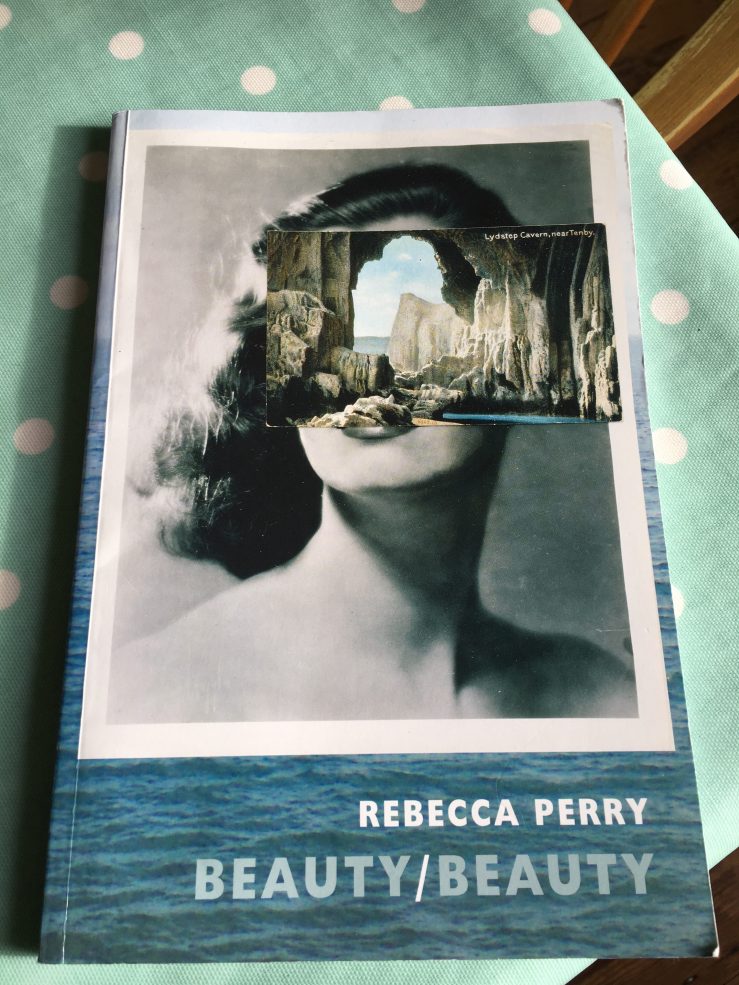
I’m back at St Gregory’s Catholic College, Bath, for my final term as Writer in Residence and I thought I’d mention two poems which students have particularly enjoyed. Both are about creatures  – one about a wasp, and one about seagulls.  The students loved reading the poems and they’ve written brilliant poems in response.    The two poems are Wasp by Rebecca Perry from her wonderful collection Beauty/Beauty (Bloodaxe, 2015) and Seagull by Brian McCabe from his collection Body Parts (Canongate 1999). 

Wasp by Rebecca Perry is available to read online here at The Manchester Review.

I’ve mainly used these poems with Year 7 and Year 8 students.  I first read Wasp aloud.  Students listened and wrote down what they thought the poem was about.  Most thought that little snail-slime wings and little alien, little feeler was describing a creature, possibly a bird or an insect.  little pollen sucking bead made some think it might be a bee.

Students were then each given a copy of the poem (with the title hidden) and we read it aloud a few times, taking turns to read a few lines each.

little gave the hint that it was something small!  The shape of the creature was hinted at by little clinging cashew nut.  Students roughly sketched a cashew nut to think about this more carefully.  little yellow-black armadillo gave a clue about shape and colour.  little zebra told them it might be striped.

There was a lot of discussion.  Students liked working out the clues.  Once they knew it was a wasp, they enjoyed reading the poem again and seeing how the poet had closely described the insect.  We imagined that she’d observed it at very close quarters.  They mimed the action of a little sifter, sifting for gold.

Flowers would look like gold to a wasp, one student said.  Pollen is like gold.

A wasp would see the world differently.

This poem is about something small with a lot of power.

‘little pocket knife’ tells you it might be dangerous

After the discussion, students wrote their own poems.  One Year 7 student wrote this super poem about a caterpillar:

Caterpillar by Xavier

little rope, little nibbler
little green dancer
little eater, little engine
little lawnmower
little friend, little searcher
little explosion

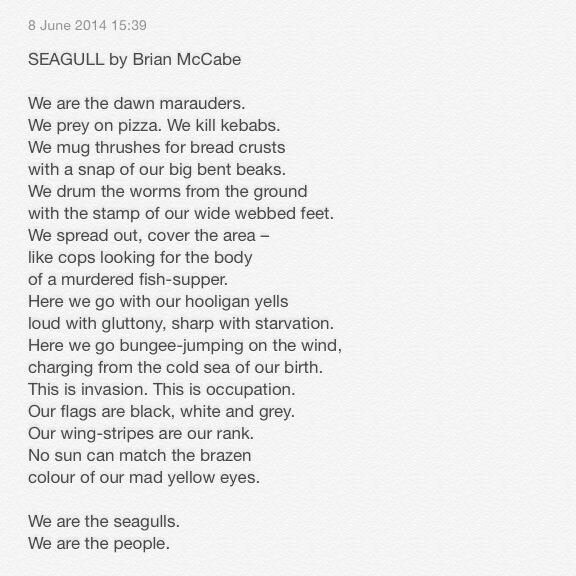
Since we were thinking about ‘creatures’, Seagull by Brian McCabe fitted in nicely as a companion poem to Wasp. The poem seems to be very available on the internet so I thought it would be alright to reproduce an image of it below:

Again, students read this with the title hidden and they quickly worked out what the poem was describing. They loved the thuggish image of the bird “preying on pizza and killing kebabs.” There was much discussion of the times that we had fallen victim to seagulls’ hooliganism. After several readings and discussion, students wrote their own poems. Some of them are so impressive, I’m going to enter them into a competition, so I can’t reproduce them here. Watch this space!

Writing poems about flowers #writerinschool


Writing poems about flowers #writerinschool

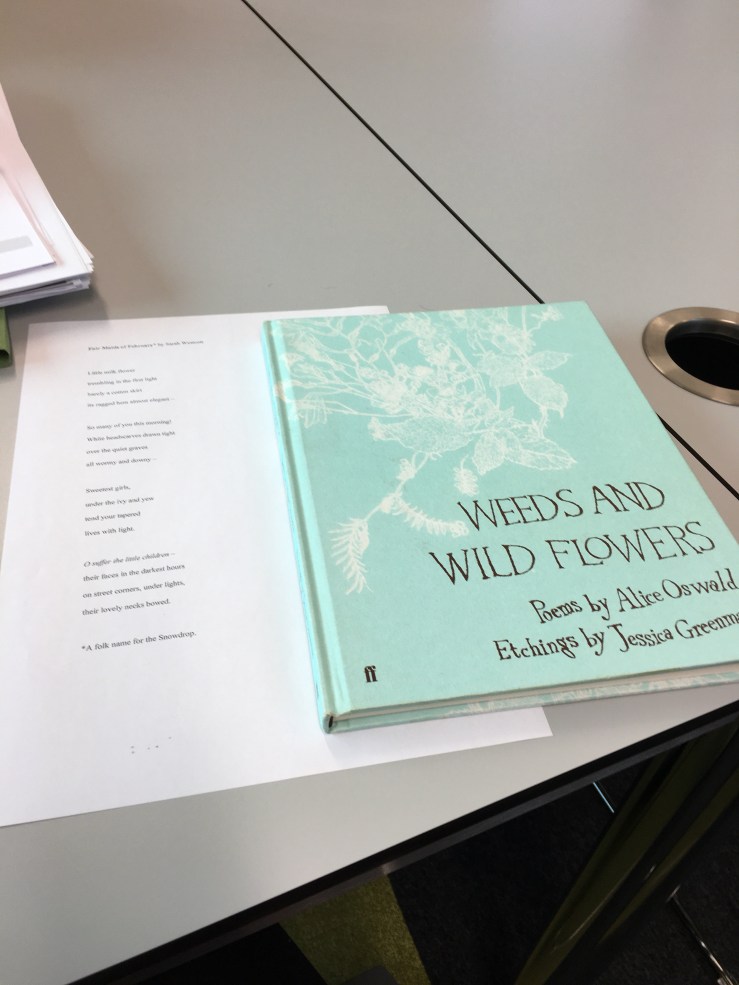
This week I took Alice Oswald’s book Weeds and Wild Flowers in to St Gregory’s Catholic College, Bath, where I’m working as Writer in Residence.

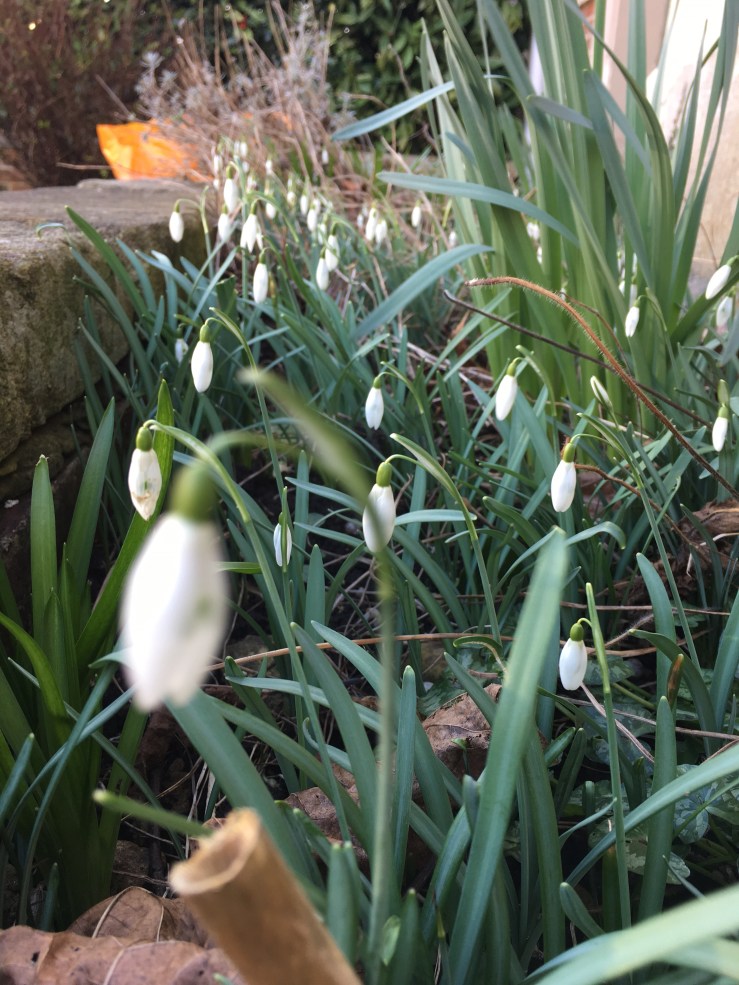
I was prompted to do this by Sarah Westcott’s gorgeous poem about snowdrops Fair Maids of February which was a winner in this year’s Cafe Writers Competition judged by Liz Berry.  Sarah has written a blog about her poem here and you can read Fair Maids of February, and all of the winning poems, here.  I love the way Sarah Westcott has used a folklore name for the winter flower – she also calls them “little milk flowers” in the poem, another name the flower is known by – and how she imagines them as ‘girls’ or ‘maids’.

So many of you this morning!
White headscarves drawn tight

Alice Oswald also likens the flowers to girls in her poem Snowdrop

A pale and pining girl, head bowed, heart gnawed,
whose figure nods and shivers in a shawl
of fine white wool, has suddenly appeared
in the damp woods, as mild and mute as snowfall.

These poems really captured the imaginations of the young writers I worked with this week, and it is the perfect time of year to try to write about snowdrops as they are flowering everywhere in gardens and parks.

Sarah Westcott has a collection Slant Light with Pavilion Poetry which I enjoyed very much.  There are more poems here which will be popular in school, I think.

Students also loved Alice Oswald’s poem Daisy, and many others in this beautiful book.  The etchings by Jessica Greenman are wonderful.

I will not meet that quiet child
roughly my age but match-size
I will not kneel low enough to her lashes
to look her in her open eye

One student commented, after reading these poems about flowers, that she thought the poets had really noticed the flowers and taken their time looking. I thought this was an insightful observation by a young writer, and was something of a lightbulb moment for her, to have been given permission to stop and stare, and not rush about.

Here’s hoping that we all manage some time to stop and notice this week.  Do, please, leave your recommendations for more flower poems.

Very short crime stories: #writerinschool


Very short crime stories: #writerinschool

I brought in some crime flash fiction to St Gregory’s School where I work one day a week as writer in residence and the students loved reading, talking about, and writing their own very short crime stories.  These were Year 8 and Year 9 students, aged 12 – 14, with a variety of different literacy abilities and backgrounds.

I used fictions from  CrimeFest’s Flashbang Competition, in particular Search History by Iain Rowan, a crime story told through the perpetrator’s internet search history; Life Sentence by Tracey Walsh,  a case of mistaken identity; Jez’s Promise by Stu Haven, a story of a car theft with a twist; Friends Reunited by Rebecca Stanley, a dark tale of revenge and Good Fluffy by Emma Bladen, a story of a cunning murderer and an even more cunning witness.  We also read Danny Smith by Dave Zeltserman, the story of a young man who searches for his past with sinister consequences…

Students relished the opportunity to think up dastardly crimes and to tell their stories in an economical fashion.  The brevity of the stories meant that we could read them aloud several times and talk about them before we started writing. Even students who are sometimes reluctant to read aloud and to write were keen to join in, perhaps because the length of the task was achievable for the time of the lesson (one hour).  Students wanted to finish their stories in time and read them aloud to the group.

I was delighted that students seemed to enjoy being crime writers and I’ll definitely bring some more flash fictions in for another session.

Writing poetry with secondary school students: using cut ups #writerinschool


Writing poetry with secondary school students: using cut ups #writerinschool

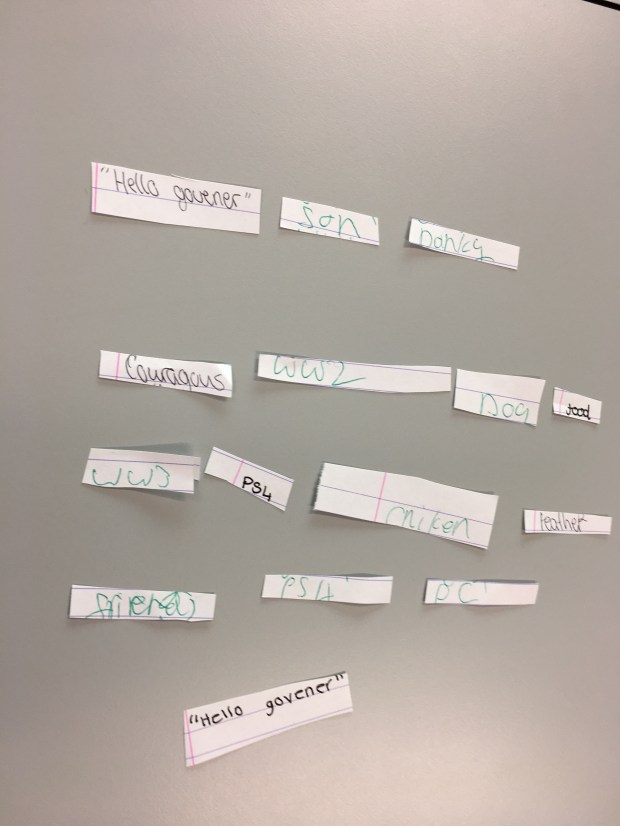
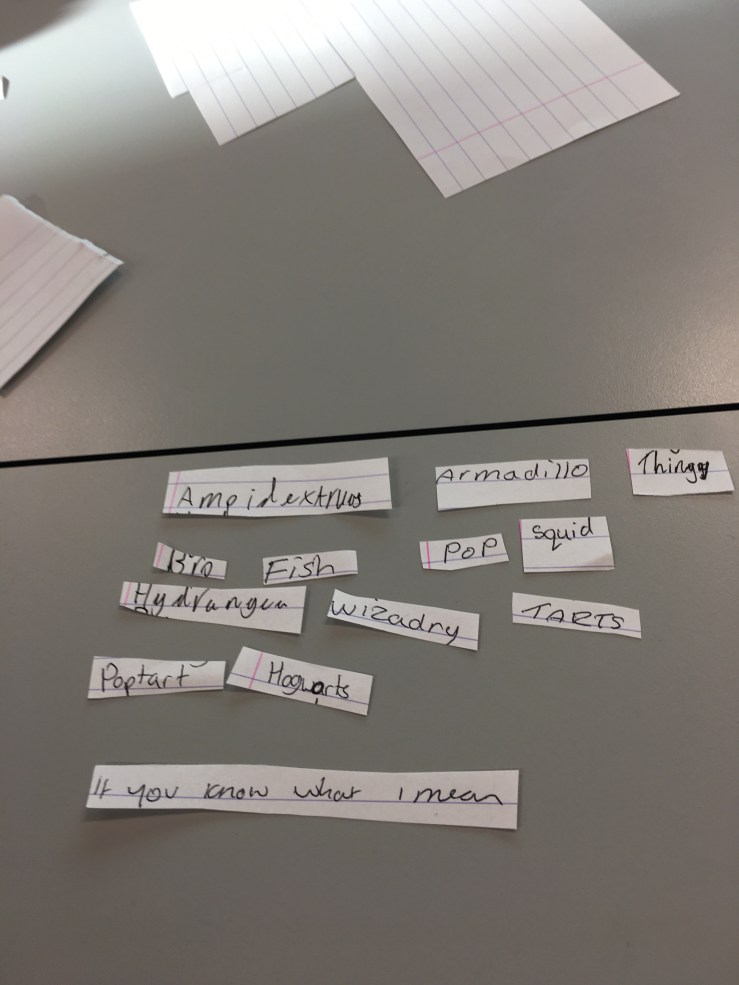
As I mentioned before, I liked the collage feel of both Anthony Wilson’s notebook posts and Julie Mellor’s post about Cubomania, in which Julie cut up blocks of text and placed them together in a random way to create new poems.  With this in mind, I started a new term at St Gregory’s Catholic College, Bath, where I work as Writer in Residence one day a week, by asking students to think of and write down their favourite words or phrases, then cut them up, then try to make new poems from the assembled collection of texts.

I wanted the students to begin the session by thinking about words they liked and I wanted the exercise to be led by them, to a large extent, rather than being dictated by me (not that I’m that kind of person, at least I hope not!).  I was reminded of a Michael Laskey writing workshop I attended in 2010, in Bridport.  Michael began the workshop by asking everyone to think of words they liked and to write them down.  He talked about liking the sound a word made and not understanding why we liked a word but just liking it.  Once we’d written down these words, and shared some of them with the group, we began to write poems using them.

I shared some of my favourite words with the students, telling them I liked the word ‘hydrangea’ and I also told them that my brother Mike has a habit of ending conversations with “Well, there you go!” or “such is life!”

Students then wrote down and shared their favourite words.  ” ‘ave it! ” was one phrase which they liked, and “Hello Governor – or Guv’nor – ”  Also “If you know what I mean.”  Lots of other words emerged.  We talked about how we should write and spell these words and agreed there were different ways.

Once they’d cut up their words, students moved the pieces of paper around to make some kind of poem.  We talked about whether or not poems needed to make sense and how some poems can make their own sense, and have their own time.  We talked about who could be speaking in the poems and how that person might be feeling.

Sometimes students wanted to add words to the pile – so that it will make more sense .  I didn’t allow that, but students could write anything they wanted in their own notebooks.  In this way, they wrote other poems, using some of the new language and ideas that the cut ups had inspired.

This was a great exercise for thinking about syntax and word order – although we didn’t talk about what we were doing in those terms – and also for considering the way that poetry breaks rules.  I was really pleased that it seemed to make students want to write more, almost as if taking away their freedom to write (by restricting them to use single words or small phrases, then cutting them up and manipulating the text) made them want to use it more.  I liked the way that manipulating language in this way made us think about spelling, order, sense, emotion, meaning.  There were some really good discussions!

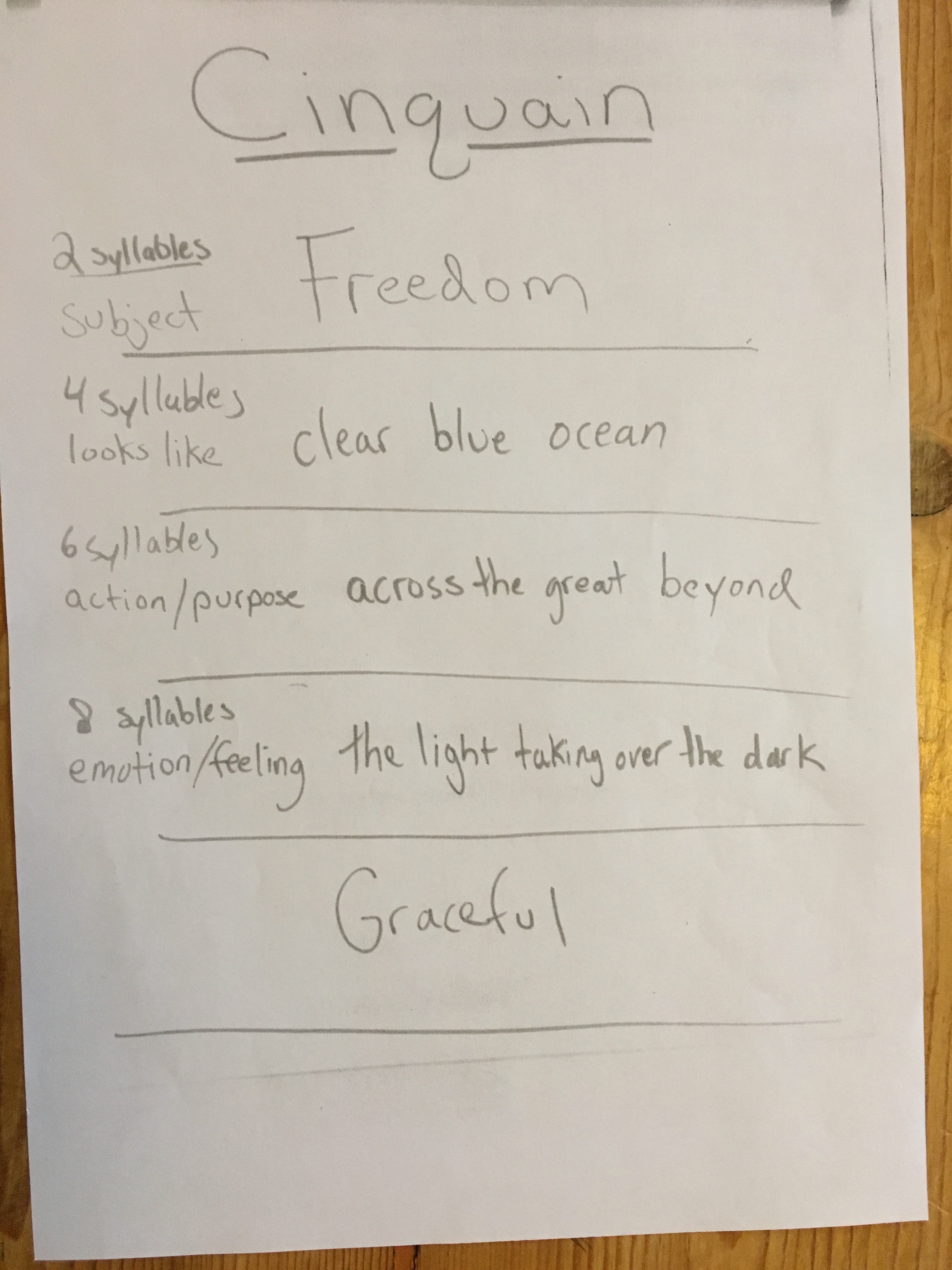
After this exercise, I gave the students some cut ups of other poems.  I first used this simple and lovely Cinquain by Cheryl Moskowitz which she shared (I think via Twitter) on National Poetry Day last year.

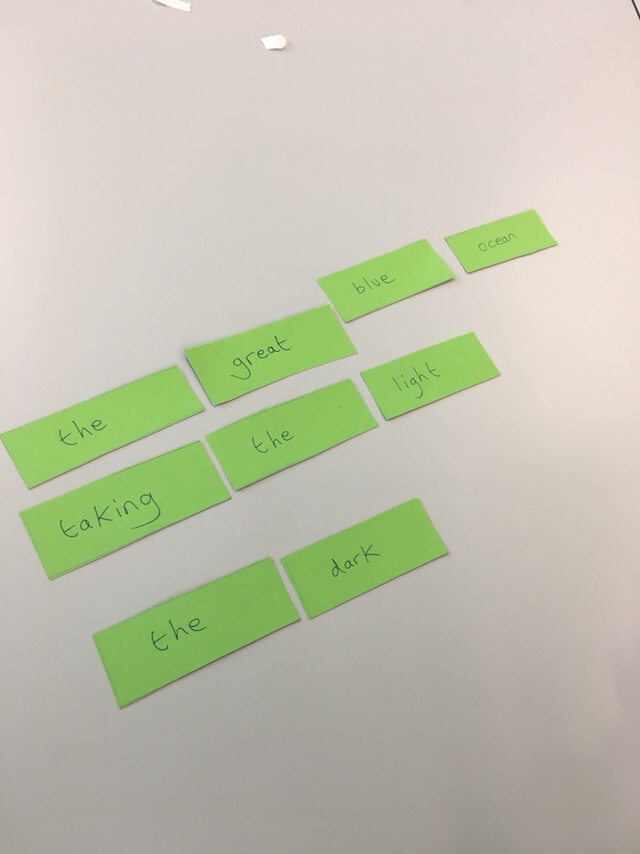
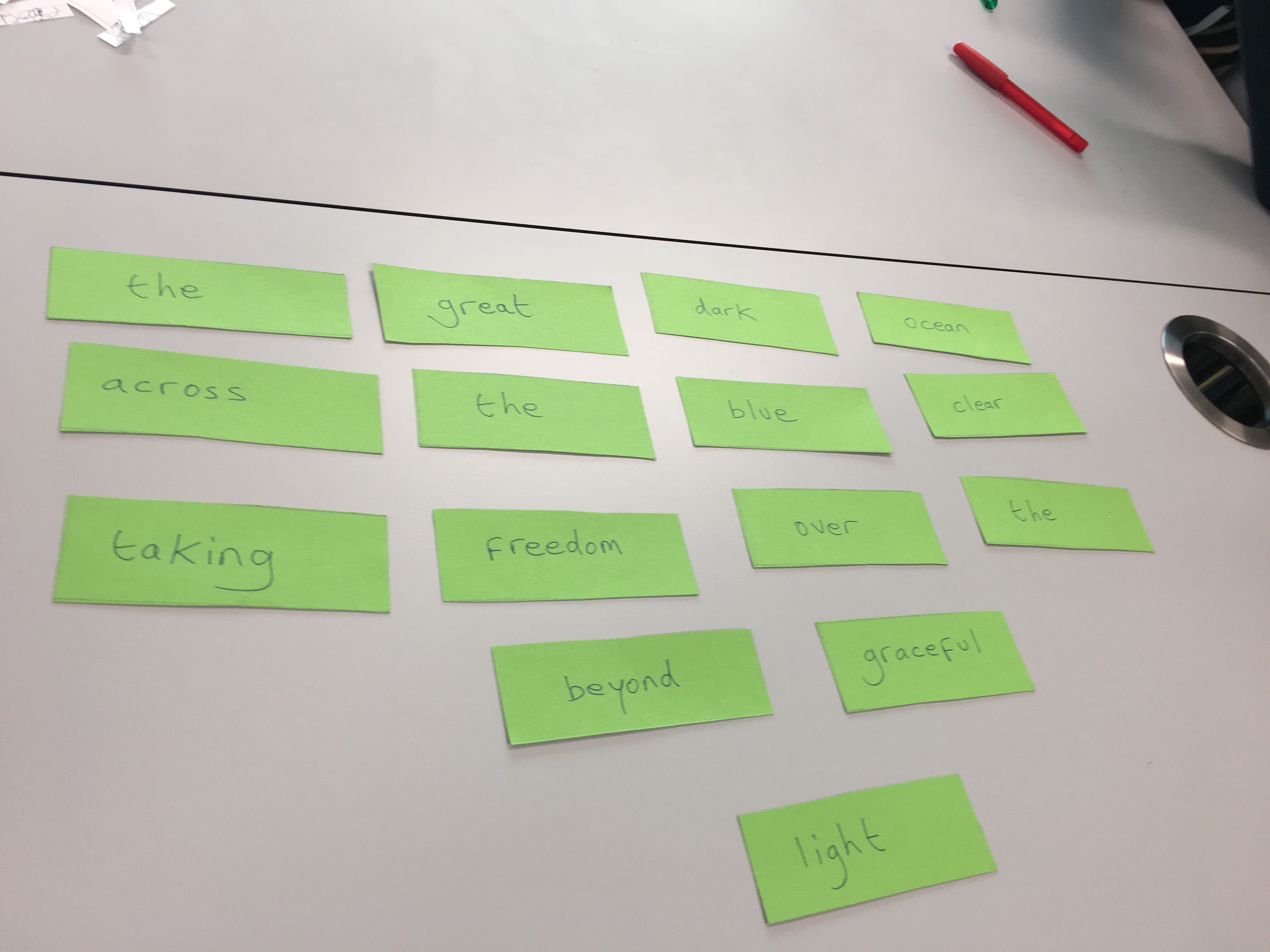
I didn’t show the students the poem at first but gave them the words of the poem cut up so they could make their own poems.


During this exercise students needed to work together and either take it in turns to arrange the words in the way they wanted or discuss and negotiate the way to arrange them.  It was fascinating to watch them work together.  I noticed that if a student couldn’t get the others to agree on a particular word order, they quietly wrote the words in the order they wanted in their own notebook.  Students shared their own versions with the group, as well.

Once the students had made their own poems, we talked about what a Cinquain was, and some students wanted to try to write their own.

There was still time at the end of a one hour session to look at one more poem.  I chose In That Year by Kim Moore.  As with the previous poems, I gave students the first four lines of the poem cut up and students started off working with these words and making poems from them.  Afterwards, students talked about what Kim’s poem was about and about how she’d used repetition very effectively.

What was very exciting about this session, which I ran with three different small groups of students, was the amount of work it produced in their notebooks – not necessarily finished poems, but ideas for new poems.  All in all, it was a good way to start a new term and to ease everyone back into the idea of reading and writing new work.

As always, please share your own ideas in the comments section, particularly if you’ve used cut ups in creative writing classes.